jueves, marzo 08, 2007

A COLOR CHANGING EXPERIMENT by Room 16


The stem helps the plant move water from the roots to the leaves.
We did an experiment with an asparagus stem
to see how the water travels through the stem.
The water travels up through tiny tubes in the stem.
After a little time, the asparagus changes color
from the colored water.
You can see the color change in the leaves.

martes, febrero 27, 2007

STEMS

The stem is the part of the plant
that connects the roots with the leaves.
The stem is sometimes called a stalk or trunk.
The stem usually grows above ground.
Some plants have a stem that grows underground.
The stem supports the plant as it grows.
It carries water from the roots to the leaves.
The stem is an important part of the plant.

viernes, febrero 09, 2007

ROOTS


The root is the part of the plant
that grows underground.
The root anchors the plant
so it has a space to grow.
The root absorbs water from the soil.
When the leaves make food for the plant
it is stored in the roots.
There are lots of roots that people eat.

jueves, febrero 08, 2007

LIMONERO por Jordi


Yo leí el cuento de "Bajo la luna de limón".
Los personajes fue la anciana, la abuela, el papá,
y la mamá y una niña llamada Rosalinda. El cuento tomó
en lugar en el jardín de Rosalinda, la casa de la abuela y el mercado.
El problema fue que el Hombre de la Noche se estaba robando
los limones de Rosalinda. A mi me gustó leer ese cuento porque
la anciana le dio una rama y Rosalinda le pusó la rama cuando estaba
la luna llena. Crecieron muchos limones que parecían la luna llena.

martes, febrero 06, 2007

GLC COMES TO LONGWOOD


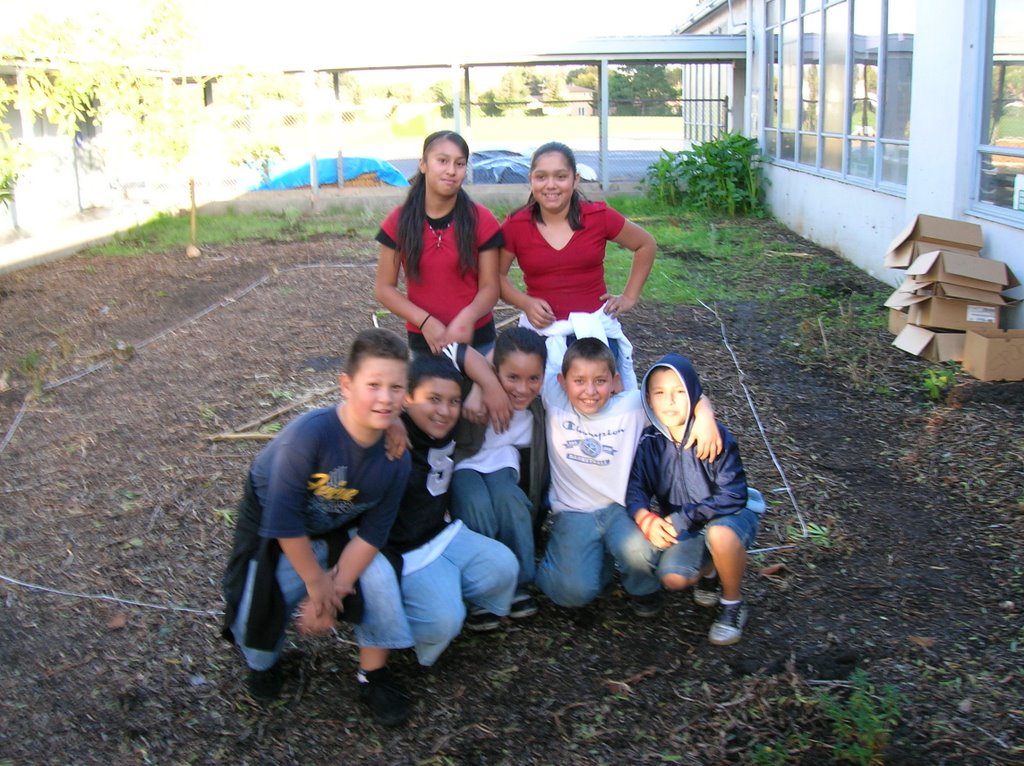
GLC (Growing Learning Communities) came to Longwood today after school. Teachers from different schools in Hayward and Oakland came to see our garden. We learned about different kinds of cucumbers. We tasted the cucumbers, then learned how to plant the seeds. We also looked at all the planting beds to see the different stages that the fava beans are at. Later, we got together in the teacher room to eat dinner together. After dinner we had a lesson on fat in food and excercise in the classroom.

MORE PHOTOS

martes, enero 30, 2007

PARTS OF A PLANT


Students from Room 16 examine the plants in the garden to identify the parts of a plant.

MORE PHOTOS

lunes, enero 29, 2007

sábado, diciembre 23, 2006

jueves, octubre 26, 2006

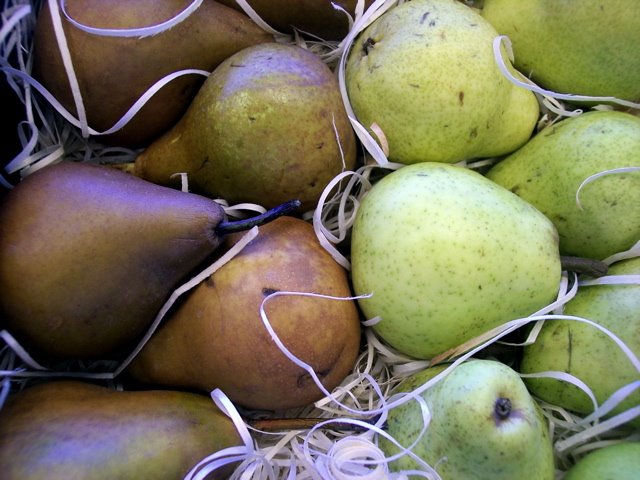
HARVEST OF PLENTY

PRAYING MANTIS by Room 16 Students


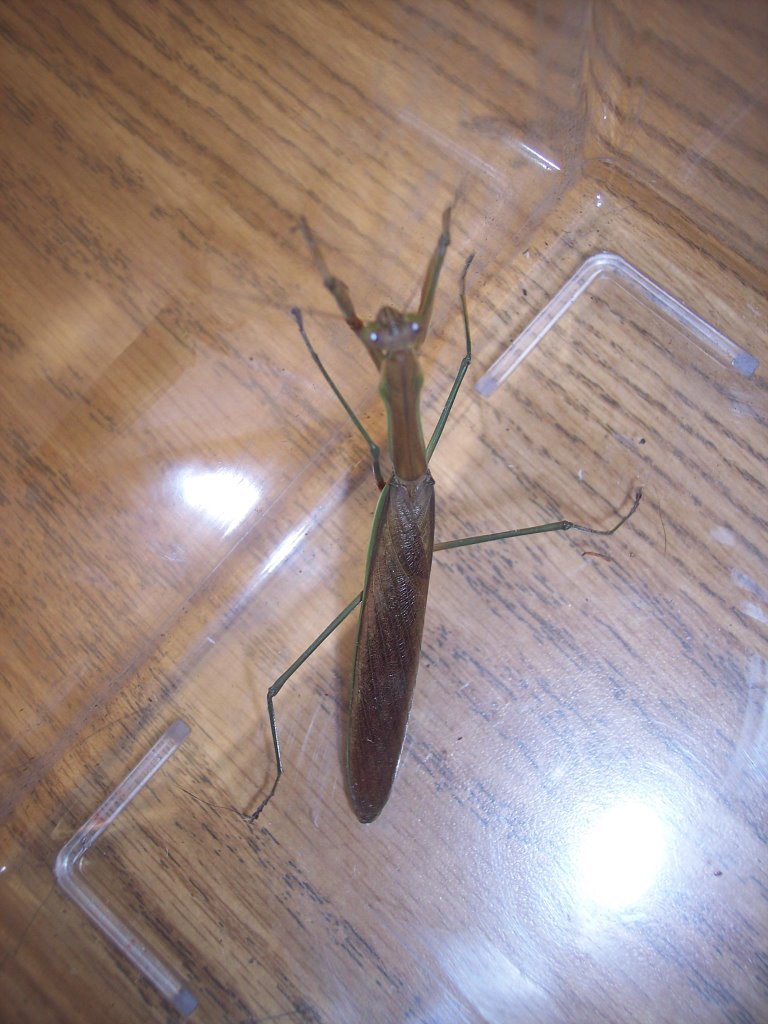
Ms. Young found this praying mantis outside her door. This praying mantis measures about 14 cm. A praying mantis is an insect. His color is green with purple stripes on his back. He has blue eyes. Insects have six legs, just like this praying mantis. The praying mantis lives in the garden with other insects like butterflies. He can climb and fly and walk. This praying mantis has a head, a thorax, an abdomen, legs and wings. We know a lot about this praying mantis but one thing we don't know is: What does he eat?

miércoles, octubre 11, 2006

Flowers: Graph & Graph Again


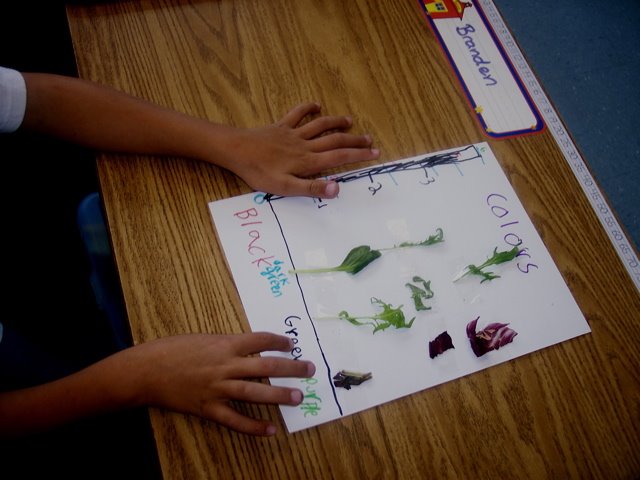
Ms. MacNab's class learned about attributes. We sorted leaves into different categories according to their various attributes, then graphed them. Here are some of our graphs. We hope you like them!

martes, octubre 03, 2006

HARDER SCHOOL GARDEN


I went to the Math in the Garden training today at Harder School. I was very impressed by their garden. They have 6 8 x 4 planter boxes that look like they are very accessible to even the youngest students. Maybe we should think about creating this size planter box at Longwood so that everybody can enjoy learning in the garden.

lunes, octubre 02, 2006

CENTIMETER BY CENTIMETER - RUBRIC

I taught this lesson from the Math in the Garden book. I developed this simple rubric for third graders to self-assess their learning.

1. PICK A PLANT OR LEAF THAT IS LESS THAN 30 CM
2. UNDERSTAND THE UNIT OF MEASUREMENT
(MM VERSUS CM, CM VERSUS INCHES)
3. CORRECTLY MEASURE THE OBJECT
4. ILLUSTRATE THE MEASUREMENT
5. EXPLAIN WHAT YOU DID